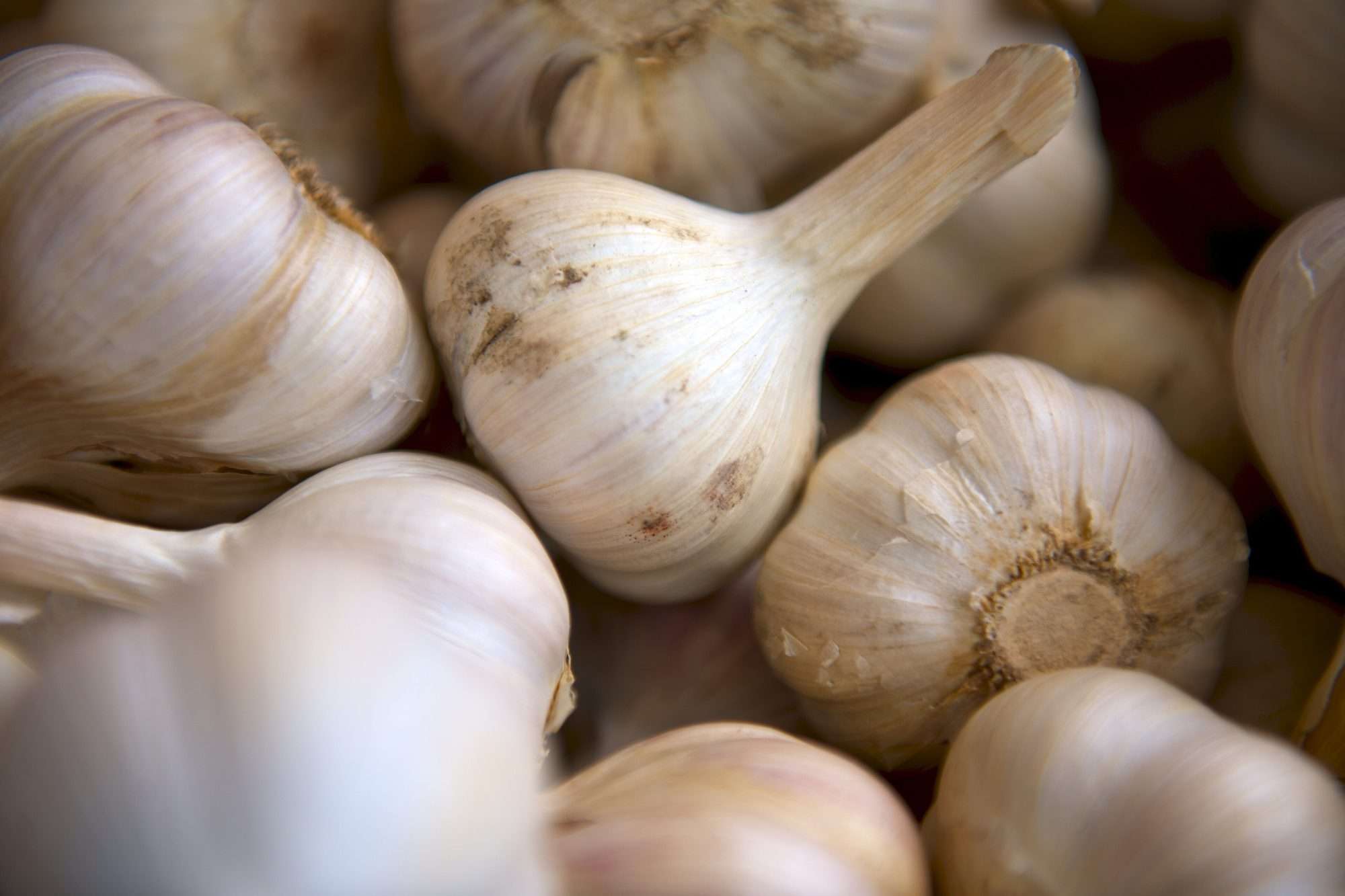
When to Plant Garlic in 2026: Fall Dates by Region
Plant garlic in fall when soil cools to about 50°F, so the cloves get the cold they need to form bulbs. Here are the dates by region.
The garden journal · November 2026
Garden Tips & SecretsVegetable gardening by the calendar, the tape measure and the extension office.
Notes by the gardeners' desk ·
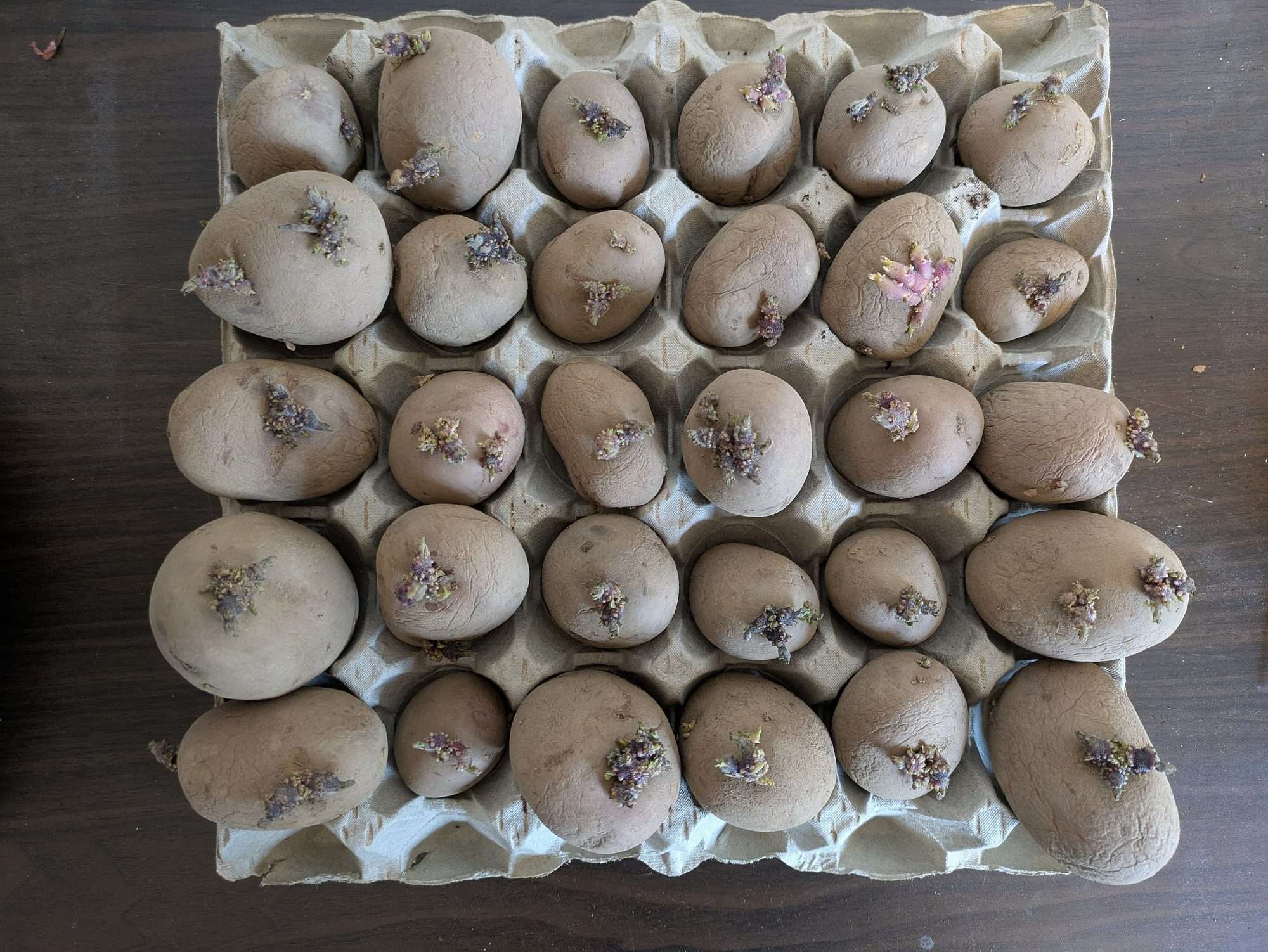
The short answer to when to plant potatoes is when the soil reaches 45°F. That usually lands a few weeks before your last spring frost. But extension services disagree on how many weeks, from zero to six. This guide shows why, and how to pick the right date for your garden.
Below you will also find a seed and yield calculator, the seed-cutting advice that varies most between sources, and Texas dates by region.
Plant potatoes when soil at planting depth reaches 45°F, typically 1 to 4 weeks before your last spring frost. Cut seed potatoes into 1.5 to 2 ounce pieces with at least one eye, and let them heal for 1 to 3 days unless your soil is warm and ready. In Texas and the South, potatoes go in from January to March, and again in fall in central regions.
Kansas State University renewed its yearly potato advice in March 2026. Its horticulture expert repeats the old rule of thumb, St. Patrick’s Day, but says mid to late March is fine once soil passes 45°F.
The University of Maryland Extension updated its potato page in March 2026 too. It sets a planting window of March 15 to May 1, depending on location. It also says early varieties can go in through June 1 for a longer harvest.
Texas A&M AgriLife Extension now hosts a newer copy of its fall guide. It still lists fall potato dates for Regions II, III and IV, and none for the coldest and warmest regions.
Every source agrees on one number. Kansas State, UMD and the University of Georgia Extension all say to plant when soil reaches at least 45°F. UGA adds that potatoes come up best once soil is above 50°F.
Cold, wet soil is the real risk. UMD warns that cut pieces will languish or rot during long cold spells. Hard frosts also slow growth once shoots appear.
Check with a soil thermometer at planting depth in the morning. If it reads 45°F or more for several days in a row, it is time to plant potatoes.
Potatoes handle a light frost, so they go in before the last frost date. How far before depends on who you ask.
| Source | Advice | Region |
|---|---|---|
| Purdue Extension | 4 to 6 weeks before last frost (hardy group) | Indiana |
| Washington State University | 4 to 5 weeks before frost-free date (very hardy group) | Washington |
| Utah State University Extension | 2 to 3 weeks before last frost | Utah |
| UC IPM | 1 to 4 weeks before last frost, by soil temperature | California |
| UNH Extension | 1 to 2 weeks before last frost | New Hampshire |
| Colorado State University | 0 to 2 weeks before last frost (semi-hardy group) | Colorado |
Why the spread? Purdue and WSU group potatoes with the hardiest crops, which can take a hard frost in the ground. CSU puts them in a semi-hardy group with less frost tolerance. UNH writes for a short, cold spring, where soil warms late. Each seed potato is safe underground, but shoots can be hurt by frost once they come up.
Our advice is to split the difference. Plant 2 to 3 weeks before your last frost if the soil is at 45°F. Wait longer in a cold, wet spring. Kansas State says shoots often take until mid to late April to emerge from a March planting, so you have some buffer. If a frost comes after they appear, pull soil up over the young potato plants.
For more spring crops, see our vegetable planting calendar.
Start with certified seed potatoes. Kansas State says grocery store potatoes often need a longer growing season and yield less. UMD adds that store-bought and leftover garden tubers can carry disease without symptoms.
Small seed potatoes can go in whole. Iowa State University Extension says to cut large ones into pieces of 1.5 to 2 ounces with one or two eyes. UMD gives a handy guide: a 6-ounce potato cut into four pieces gives you four 1.5-ounce seed pieces. Kansas State says each pound should yield 8 to 10 pieces.
This is where sources disagree most.
| Source | Advice after cutting |
|---|---|
| University of Georgia Extension | Plant right after cutting; if delayed, store at 55 to 60°F in high humidity |
| Iowa State Extension | Hold 1 to 2 days at 60 to 70°F in a humid spot |
| Kansas State University | Cut 2 to 3 days before planting so surfaces toughen |
| University of Maryland Extension | Let pieces dry for a few days |
The reason is the soil. Iowa State says healed pieces are less likely to rot in cool, wet soil. In warm Georgia soil, that risk is lower, so planting right away works. If your soil is cold or damp, give cut pieces one to three days in a warm, humid place first.
You can sprout tubers before planting, sometimes called chitting or green sprouting. UMD says to keep whole tubers in the dark at room temperature until they sprout, then move them to light to keep the sprouts short. UGA sets them in a warm, sunny room for a few weeks, two to three in all. Early varieties benefit most from this head start.
Depth advice also varies, mostly with timing. UMD says to plant 3 to 5 inches deep, cut side down, and 5 to 6 inches deep for later crops. UGA uses 4 to 5 inches. Utah State uses 4 to 6 inches. Kansas State, writing about early March planting, suggests 1 to 2 inches deep.
Shallow planting in cold soil warms the seed potato faster. Deeper planting suits warmer soil and later crops. Either way, you will pull soil around the stems as plants grow.
Spacing runs 8 to 12 inches in the row for most sources. UMD says to space plants 9 inches apart if you mainly want new potatoes. For big storage potatoes, it goes as far as 20 inches.
Potatoes need loose, rich soil. UMD says they grow best in well-drained soil high in organic matter, with a soil pH of 6.0 to 6.5. Where scab is a constant problem, UMD suggests a lower pH of 4.8 to 5.8.
Feed early. UMD says to apply fertilizer before planting, then side-dress about 6 weeks after planting, when tubers start to form. Keep pulling soil around the stems as the plants grow. Kansas State notes that new potatoes form along the main stem above the seed potato, and sunlight turns them green.
Watch for pests once shoots appear. UMD lists the Colorado potato beetle, potato leafhopper and potato tuberworm among common problems, along with common scab.
Use the calculator to plan your seed order and harvest. Enter your row length and spacing.
Utah State says to plan 8 to 10 pounds of seed potatoes for every 100 feet of row. UMD expects 6 to 15 pounds of potatoes from each 10-foot row. So 100 feet of row could return 60 to 150 pounds. That is about 6 to 19 times the weight of seed you plant.
In the South, potatoes go in during winter. Texas A&M AgriLife splits Texas into five regions, from the Panhandle (Region I) to the far south (Region V).
| Texas region | Spring planting | Fall planting |
|---|---|---|
| Region I (zone 6) | Mar 15 to Apr 7 | Not recommended |
| Region II (zone 7) | Mar 10 to Apr 1 | Aug 1 |
| Region III (zone 8) | Feb 15 to Mar 1 | Sep 1 |
| Region IV (zone 9A) | Jan 15 to Feb 15 | Oct 1 |
| Region V (zone 9B) | Jan 1 to Feb 1 | Not recommended |
UGA also warns that russet potatoes like those in grocery stores do not grow well in the South. It suggests varieties such as Kennebec and Red Pontiac instead. Our Texas vegetable planting calendar has every other crop by region.
Use soil temperature to decide when to plant potatoes, and frost dates to plan. When soil hits 45°F, usually 2 to 3 weeks before your last frost, plant certified pieces of 1.5 to 2 ounces. Let cut pieces heal if your soil is cool. In Texas and the South, plant in winter and again in fall where Texas A&M lists a fall date.
Plant when soil reaches at least 45°F. Kansas State, the University of Maryland and the University of Georgia all use that number. UGA says potatoes come up best once soil is above 50°F. Measure at planting depth in the morning, when the soil is coldest.
It depends on your soil. Kansas State cuts 2 to 3 days ahead, and Iowa State holds pieces 1 to 2 days at 60 to 70°F. The University of Georgia plants right after cutting. In cold or wet soil, let cut pieces heal first so they resist rot.
Yes. Potatoes tolerate light frost, and most extension services plant them 1 to 4 weeks before the last frost date. Purdue goes as early as 6 weeks. If shoots come up and frost is forecast, pull soil over them to protect the new growth.
In warm climates, yes. Texas A&M lists fall potato planting on August 1 in Region II, September 1 in Region III and October 1 in Region IV. In colder areas, potatoes are a spring crop. UMD says early varieties can go in through June 1 for a later harvest.
Utah State recommends 8 to 10 pounds of seed potatoes per 100 feet of row. Kansas State says a pound cuts into 8 to 10 pieces. At 12-inch spacing, a 25-foot row holds about 26 pieces, or roughly 2.6 to 3.3 pounds of seed.
Plant garlic in fall when soil cools to about 50°F, so the cloves get the cold they need to form bulbs. Here are the dates by region.
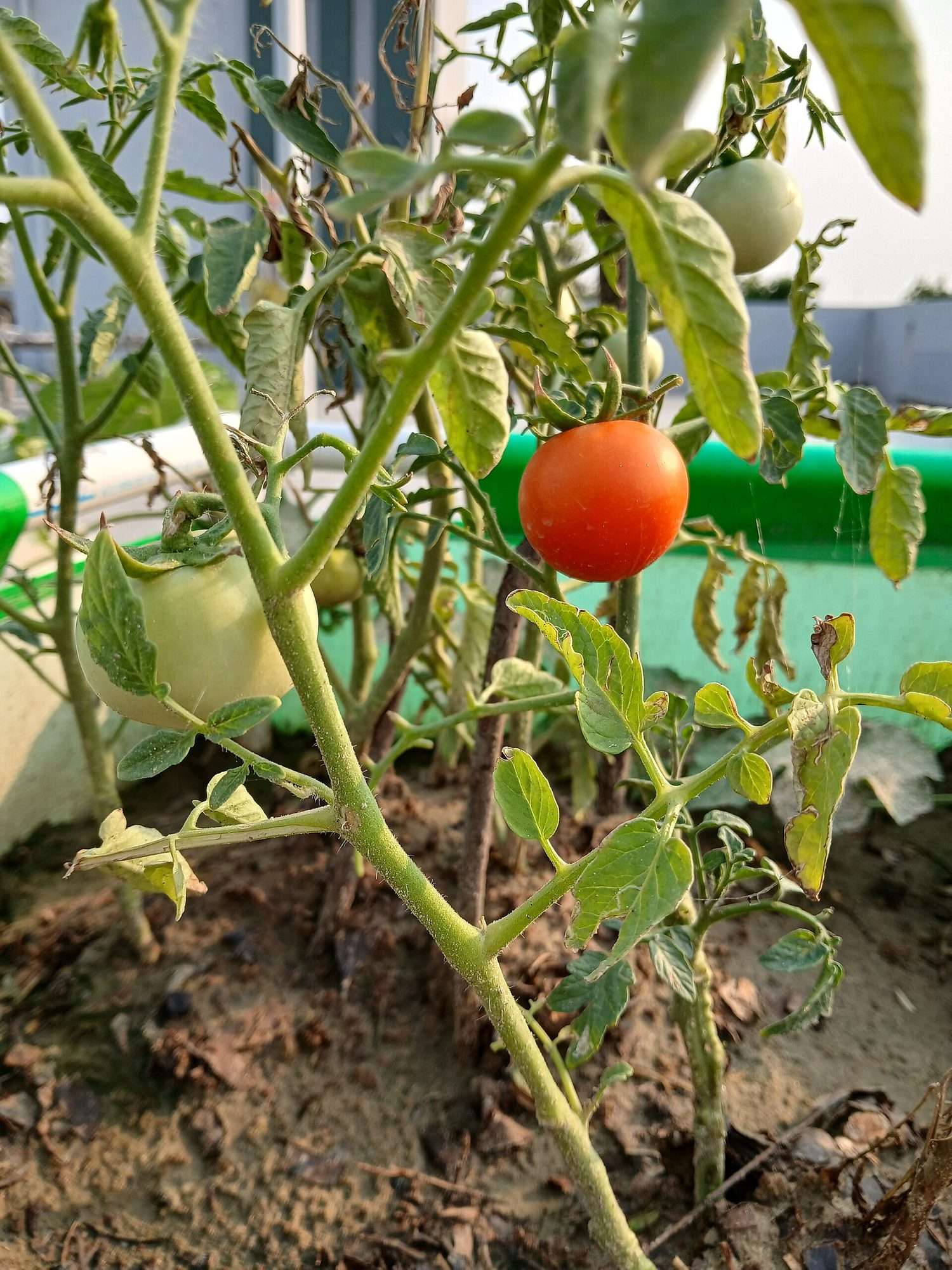
Tomatoes go out 1 to 2 weeks after your last frost, once soil reaches about 60°F. Here are the dates by region, including all of Texas.
Picture: Tulspal, CC BY-SA 4.0